Sending high quality video signals over long distances in a reliable way can be challenging, due to limitations of the transmission medium. That is especially difficult in harsh industrial environments with high levels of electromagnetic radiation, which causes interference (EMI). The other limiting factor is the physical distance which can be covered with copper signal cables as the video signal, just like any other digital signal, gets distorted and attenuated by the cable itself.
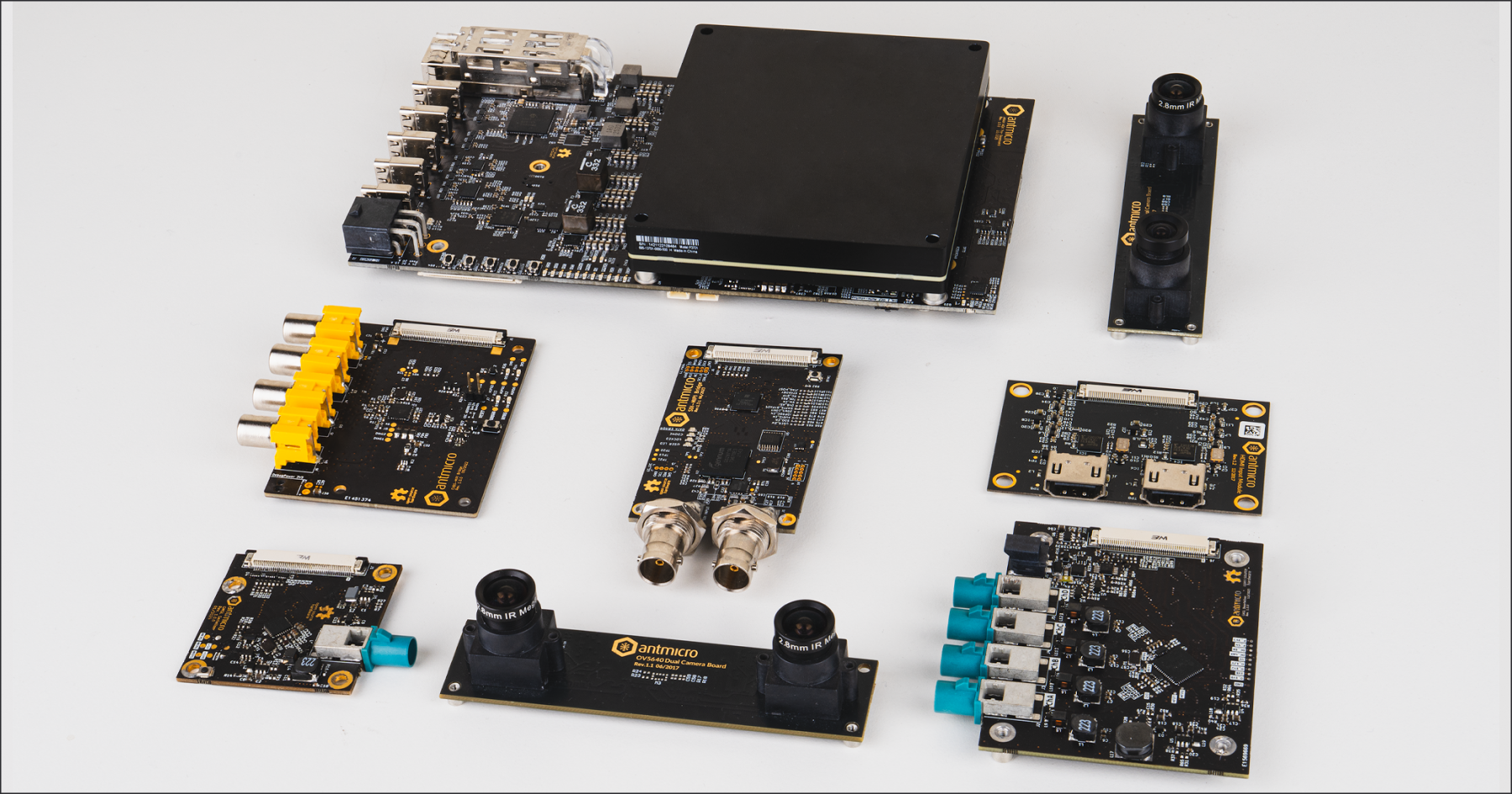
With development of complex vision systems at the core of our services, accommodating customer needs in areas such as robotics, construction, mining and broadcasting, Antmicro often builds dedicated video streaming modules, such as our GMSL serializer and deserializer, as well as open hardware video accessories like the SDI to MIPI CSI-2 Bridge and the SDI to MIPI CSI-2 Converter that can be further customized and integrated into larger, complex embedded systems. However, GMSL and SDI are not always the best fit for a setting that requires both long-distance connection and high immunity to EMI.
With that in mind, Antmicro designed the SDI-Fiber Adapter - a bidirectional adapter that sends video from a 3G-SDI source into a fiber-optic cable. The optical medium, as compared to its copper cable counterpart, offers superior resilience to EMI and much lower signal attenuation, allowing to cover greater distances without loss of quality.
The SDI-Fiber Adapter at a glance
The SDI-Fiber adapter is a device with a pair of SDI ports and SFP dual fiber transceiver. It can be used for bidirectional video conversion - either as SDI to fiber or fiber to SDI translator.
SDI input and output ports use BNC coaxial cable connectors. For the fiber interface, the board includes an SPF+ connector for connecting a 3G-SDI SPF transceiver module, which transmits the SDI video signal over the optic cable. Power is provided via a USB-C (5V) port. The design features two LMH0397 reclockers, which support SMPTE ST-424 (3G), SMPTE ST-292 (HD), and SMPTE ST-259 (SD) standards. The LMH0397 is pin-compatible with the LMH1297, allowing for a possible upgrade to 12G-SDI. If upgraded, it supports SMPTE ST-2082-1 (12G), as well as SMPTE ST-2081-1 (6G) for higher bitrates and video quality.
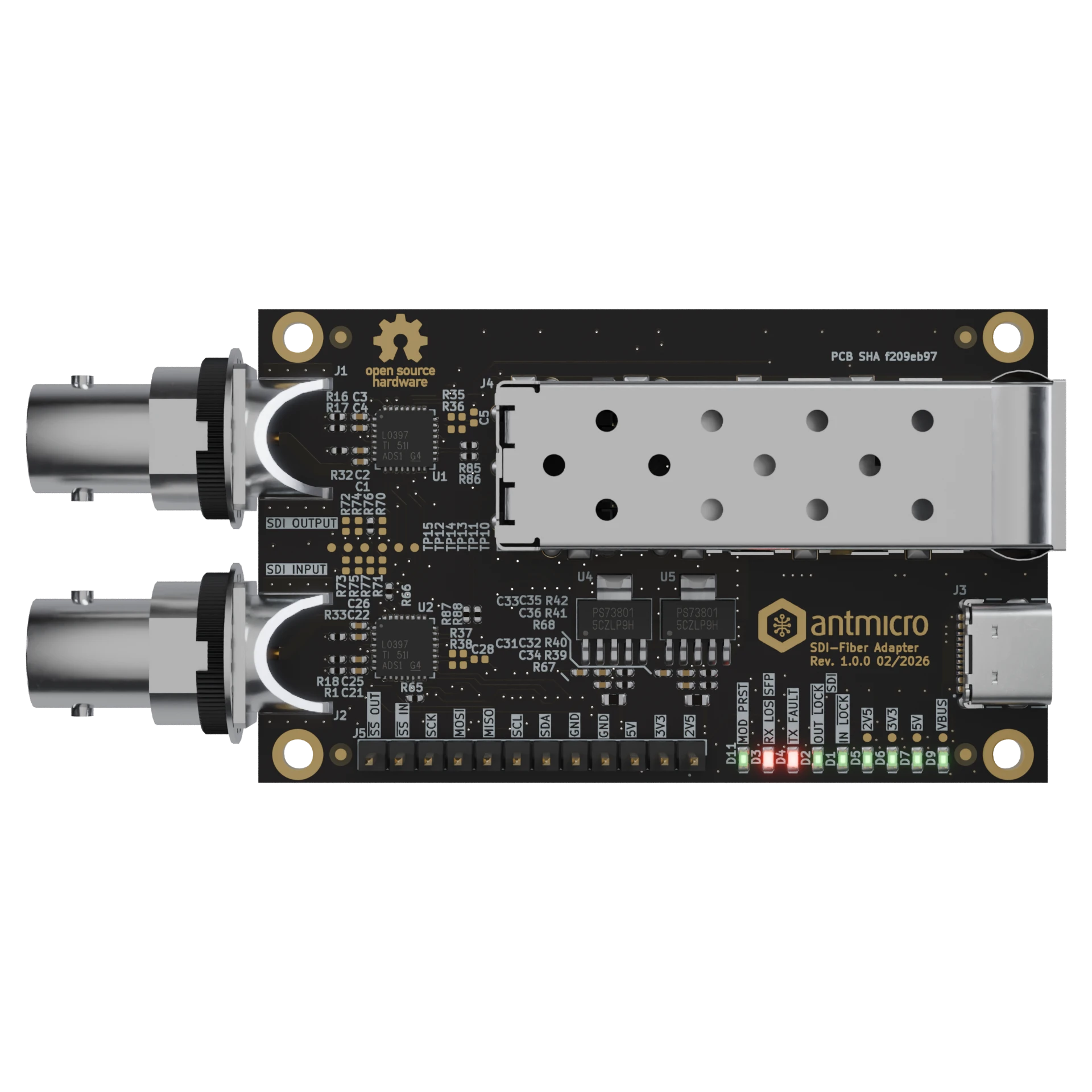
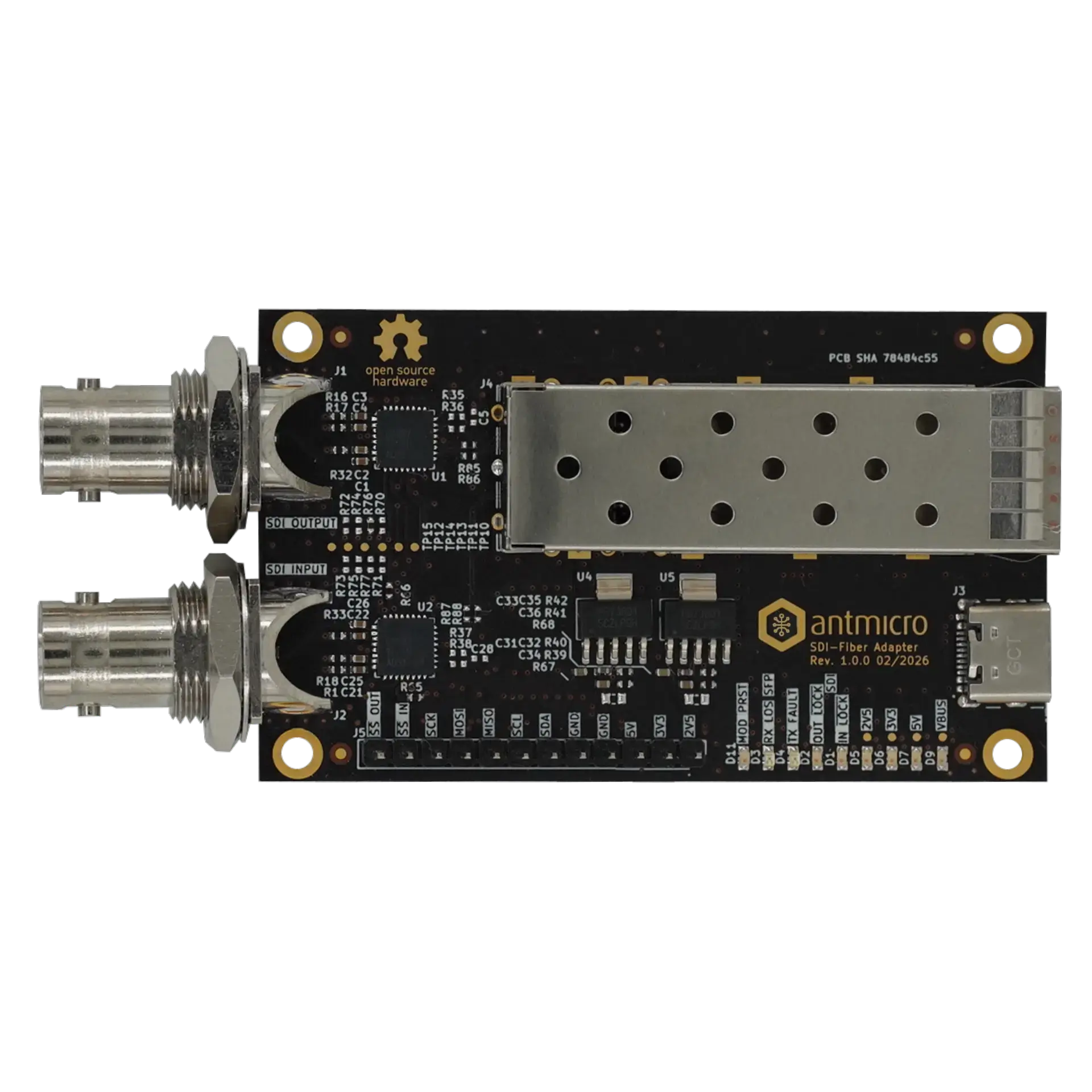
The Adapter works without need for external configuration. However, if required, the I2C interface can be used to handle configuration or reading diagnostics of the SFP module and the LMH integrated circuits. Additionally, the optional SPI interface enables handling configuration of the SDI Bidirectional I/O.
The PCB has an outline of 70 x 42 mm (2.76 x 1.65 inch). The board is electrically compatible with Antmicro’s SDI to MIPI CSI-2 Converter and electrically and mechanically compatible with our SDI to MIPI CSI-2 Bridge. When paired with these accessories, the Adapter can be used with our open source boards such as the Antmicro baseboard for Jetson Nano, the Antmicro baseboard for Jetson Orin, and the Antmicro baseboard for Jetson AGX Thor.
The design is published as Open Source Hardware.
Extending the range of video transmission from meters to kilometers with fiber-optic cables
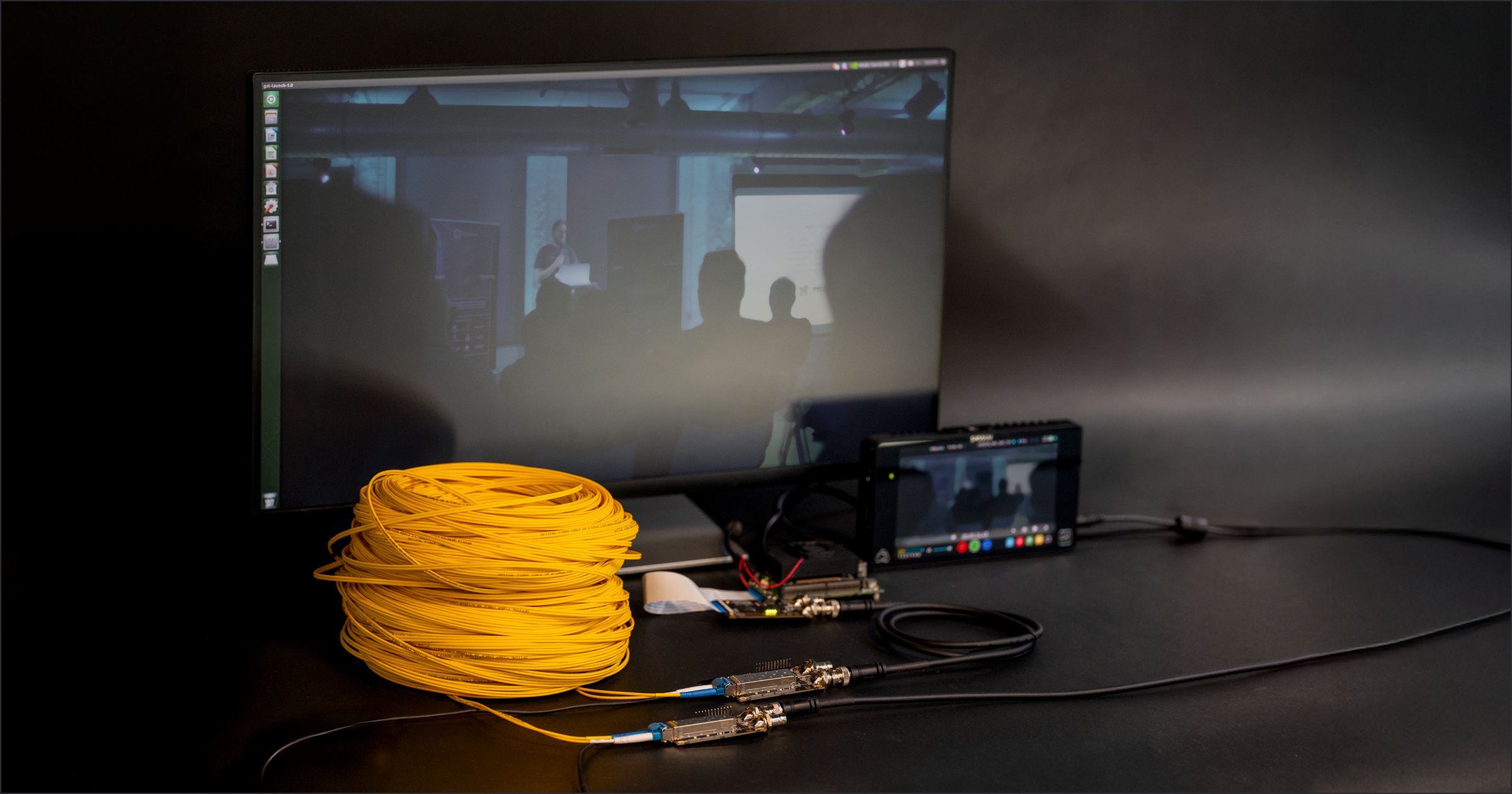
To test the range of the SDI-Fiber Adapter, we connected it to different configurations of SDI and fiber-optic cable lengths. The cables used were all from the same manufacturer and of the same quality, differing in length only.
The setup consisted of:
- an Atomos Shogun SDI as the video source,
- an SDI-Fiber Adapter,
- an SDI-to-MIPI-CSI-2 Bridge,
- an Antmicro baseboard for Jetson Nano for testing the video quality.
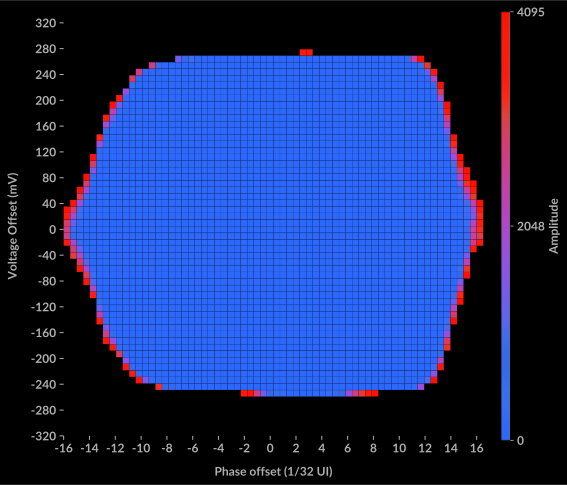
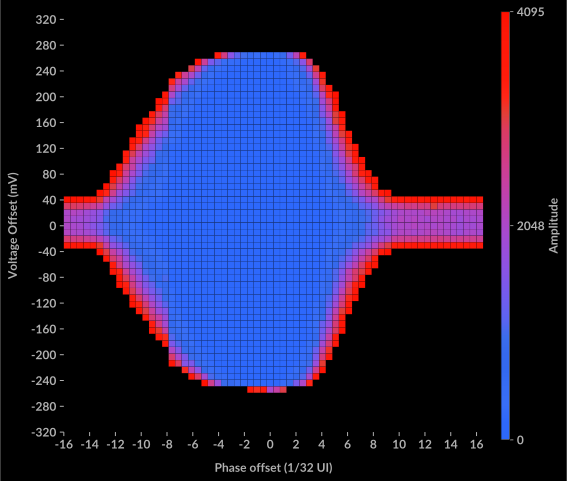
The eye diagram parameters from the tests were read using the LMH0397 chip. We were able to observe Horizontal Eye Opening (HEO) and Vertical Eye Opening (VEO) - which allow us to determine the quality of the received image - for SDI cables of up to 30 meters in length. We received a stable video with no visible quality loss with SDI cables as long as 60 meters.
The eye diagrams below show HEO and VEO of the video signal transmitted through SDI cables. When comparing the diagrams of a 1 meter cable (left) and a 30 meter cable (right), we see that the signal shows signs of degradation.
Fiber-optic cables, however, are much more immune to signal degradation, and therefore can span much longer distances. We connected our Adapter to a 400 meter-long fiber-optic patch cord, and then connected that patch cord to another SDI-Fiber Adapter in order to convert the signal back to SDI. The visual quality of the image received over the distance of 400 meters was stable and the footage showed no visible deterioration.
Since the length of the fiber cable depends on the inserted SPF module, the possible transmission distance can be extended further. The SPF module is interchangeable, so it can easily be customized to accommodate specific needs. Depending on the module and manufacturer, the length of the fiber-optic cable could reach even 80 kilometers.
Integrate the SDI-Fiber Adapter into your device for reliable long-distance video transmission
Antmicro’s SDI-Fiber Adapter is an open source board allowing for stable long-distance video transfer. Utilizing a fiber-optic cable makes it a great option for equipment in environments with high levels of EMI such as construction sites, mining operations, or large-scale cultural events.
With possibilities to upgrade from 3G to 12G-SDI and the interchangeable SPF module, the SDI-Fiber Adapter is easily customizable. If you think your device would benefit from an SDI-Fiber adapter, you can find out more about how we design custom hardware to match what you need, or reach out to us at contact@antmicro.com.