Having doubled down on the strategic partnership started in mid 2024, Antmicro, driving change in advanced computing systems development with open source, and Aethero, a designer and manufacturer of space-rated high-end computers, with the ambitious goal of deploying AI-accelerated computing platforms built around widely available COTS solutions to space, are extending the capabilities of Aethero’s growing fleet of space computers with more compute, versatile modules, and automated testing and update systems.
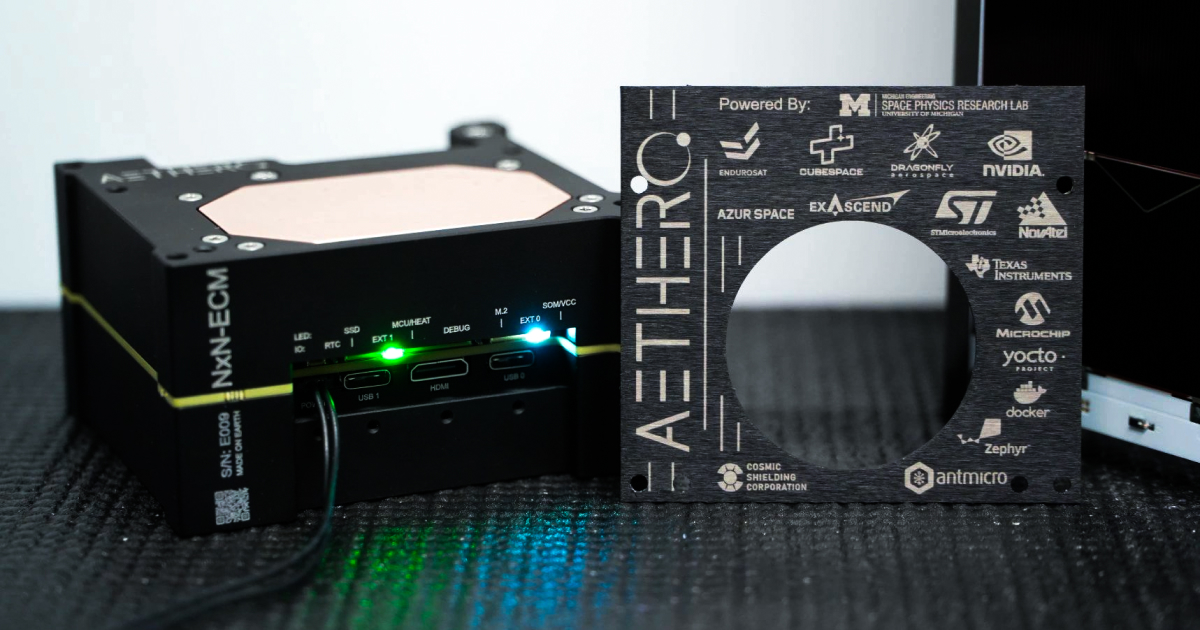
Following the successful Deimos mission that carried Aethero’s NxN Edge Computing Module, developed as a customization of Antmicro’s open hardware baseboard for NVIDIA Jetson Orin™, to LEO, the companies collaboration is communicated in anticipation of Aethero’s Phobos mission, a 4U CubeSat satellite that integrates an upgraded version of the NxN-ECM, carried aboard the SpaceX Falcon-9 in the upcoming Transporter-16 rideshare.
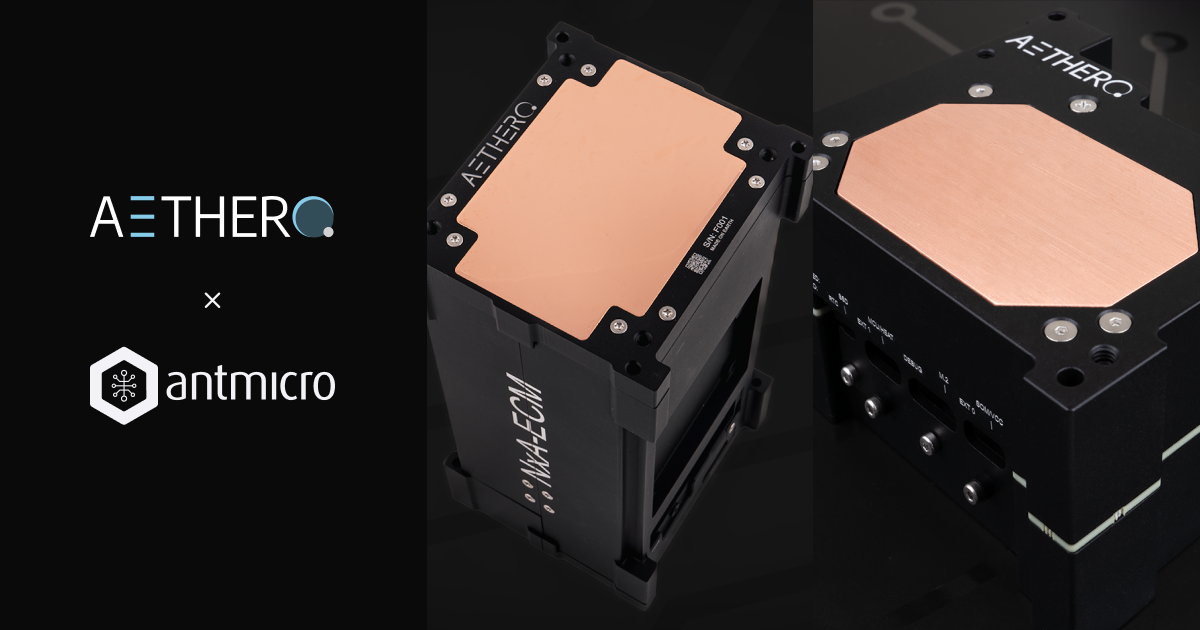
The modified NxN-ECM, enabling the Jetson Orin NX SoM to operate in Super mode with up to 157 TOPS, and the recently revealed next-gen NxA-ECM harnessing the power of Jetson AGX Orin™ or Jetson AGX Thor™, for both of which Antmicro provided full-stack development and integration services, unlock new opportunities for customers looking to use space compute as a service.
From digital design to deployment in LEO: a modular high-performance space infrastructure
Aethero’s unique approach to developing space-faring edge computers begins at the design stage. By combining COTS processing platforms with radiation-hardened and fault-tolerant mission-critical elements, shielding and software mitigations, they deliver the benefits of both worlds. The result is a proven, reproducible infrastructure that offers space compute as a service by enabling high-performance data processing directly on board, with an accelerated turnaround and optimized cost.
In 2024 Aethero launched its first flight-heritage modular NxN-ECM platform. With a variety of expansion boards allowing for customization, the space computer allows users to scale their processing power or storage by simply swapping individual components with more powerful variants. As a result, Aethero’s devices can grow with your project, from single CubeSat platforms, as in the case of the NxN-ECM, to complex clusters.
Antmicro’s software/hardware co-development flow, based on the premise of modern engineering where the target device is designed and tested together with its complete digital twin, powered by open hardware platforms and open source tools like Remote Device Fleet Manager (RDFM) and the Renode simulation framework, aligns perfectly with Aethero’s goals. This unity of vision resulted in a long-standing collaboration since the early days of Aethero, and is now bringing about the next generation of Jetson-powered AI space computers.
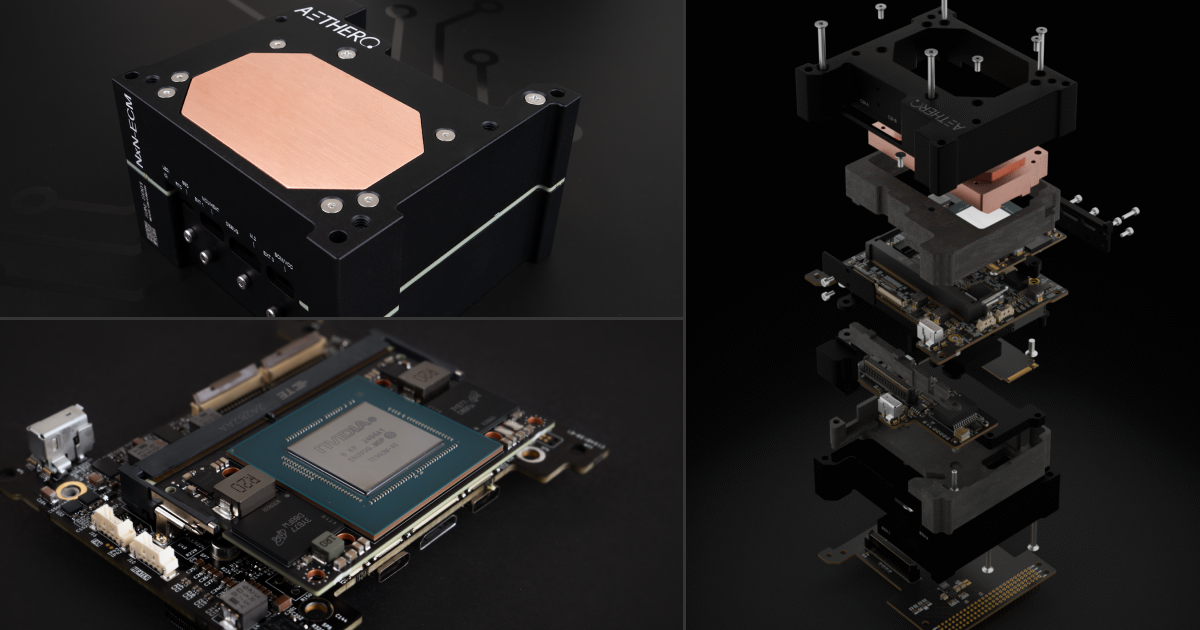
The customized baseboard for Nvidia Jetson Orin optimized for space-grade applications, which is at the heart of the NxN-ECM, follows the same principles. Derived from Antmicro’s open hardware design, it can be easily modified and expanded to meet the growing needs of Aethero’s projects and the emerging market of high-compute orbital data centers.
From the earliest stages of the project, Antmicro brings their hardware designs for Aethero to life by using an in-house developed KiCad-Blender 3D rendering flow. Building on the same design artifacts that are later used for manufacturing, the complete device can be beautifully visualized before - and throughout - the prototyping cycle, generating assembly animations and exploded views in a fully automated way.
Space compute as a service with NVIDIA Jetson Orin NX Super, Jetson AGX Orin, and Jetson AGX Thor
As Aethero’s collaboration with Antmicro continues, an upgraded version of the NxN-ECM is now available, taking advantage of the power of Nvidia Jetson Orin NX in Super mode for up to 157 TOPS, and using Zephyr RTOS on companion MCUs to manage the operation of the Linux-based OBC. This version of the NxN-ECMis fitted in Aethero’s 4U Phobos CubeSat satellite, ready to be deployed to orbit in the upcoming SpaceX Falcon-9 Transporter-16 rideshare, with expected launch from Vandenberg Space Force Base NET March 2026.
This comes in preparation for a further mission expected to take place later this year, featuring the next-gen NxA-ECM platform recently revealed by Aethero - a complex, full-stack development and integration project which took advantage of Antmicro’s rapid prototyping and testing capabilities. The new device features Nvidia’s powerful Jetson AGX Orin module and offers even up to 550 TOPS in a dual setup, with the option for even more compute with Jetson AGX Thor (up to 4000 TOPS with two Thor SoMs), paving the way towards seriously complex AI-accelerated processing applications directly on board, in space. The platform, combined with Aethero’s formula for edge computing, can help achieve geosynchronous equatorial orbit (GEO), cislunar, or even Martian environments, opening up exciting opportunities for use cases like resource mining or orbital in-situ assembly and manufacturing (ISAM).
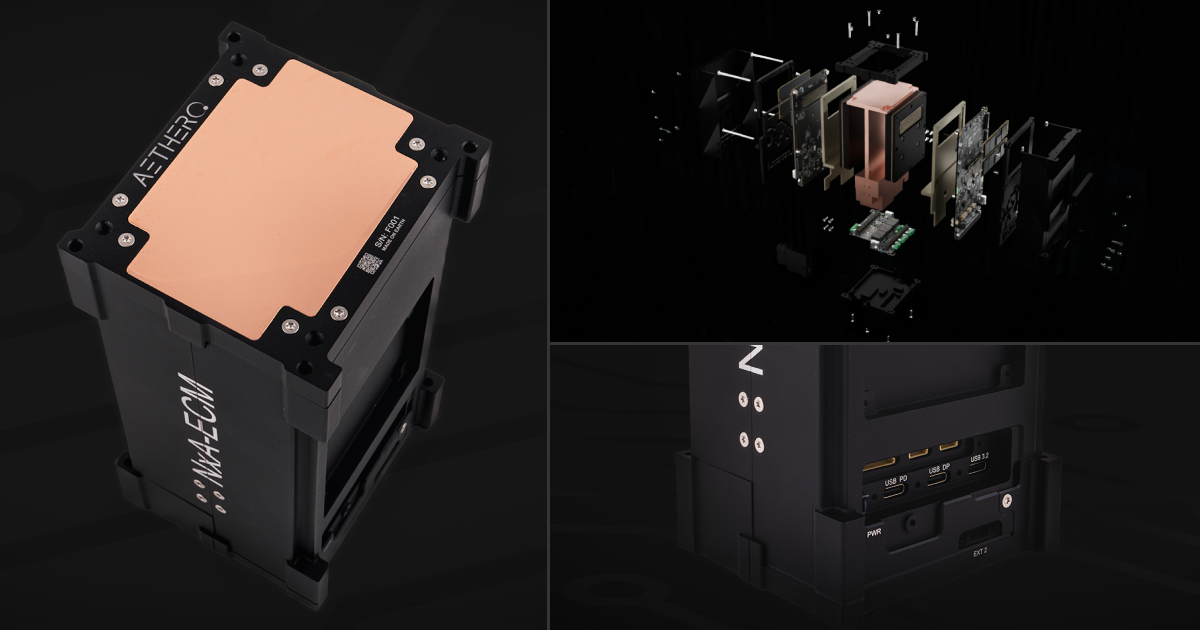
Antmicro helps customers like Aethero build complete edge computing systems in a proven, rapid development methodology that enables faster time to market: starting with beautifully visualized hardware design and prototyping, through BSP development, developing complex, multi-sensor distributed systems and sensor fusion for ML/AI-enabled applications, to post-deployment device management.
Aethero’s powerful, integrated and software-driven space compute offering is an excellent match for this vertically integrated, open source approach, and the collaboration between Aethero and Antmicro has an unparalleled track record of hardening COTS hardware for space use. Antmicro is excited to be assisting Aethero in making edge AI space compute clusters a reality, enabling emerging applications involving orbital supercomputer/data centers, telecommunications and orbital content delivery networks (CDNs), live imagery processing, autonomous spacecraft maneuvers, and more.