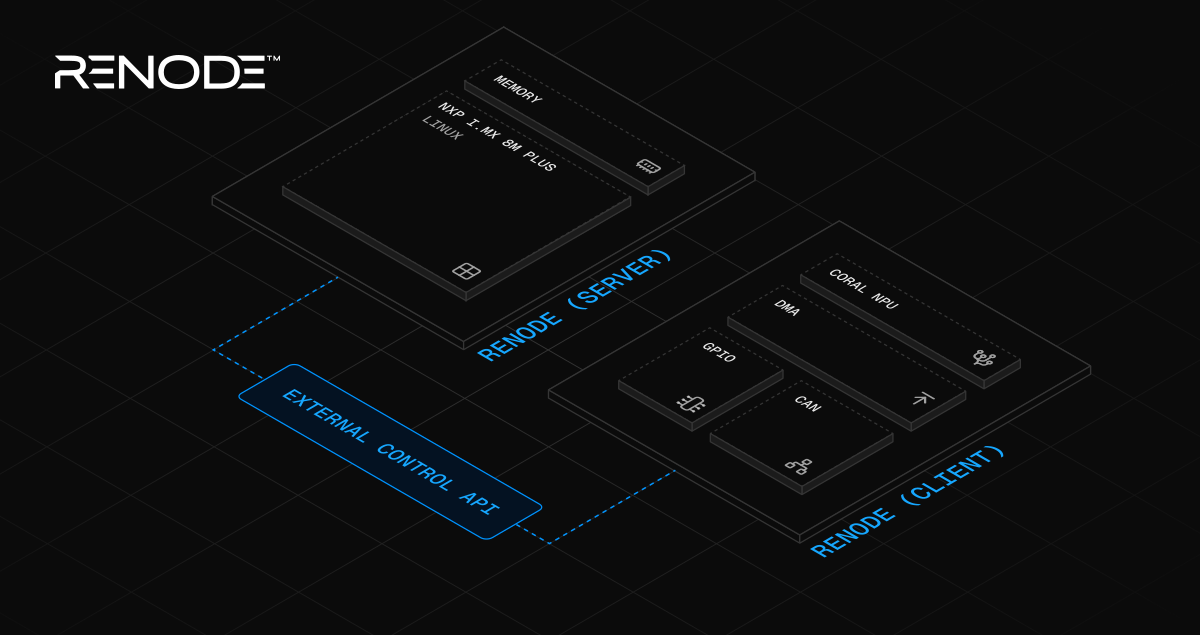
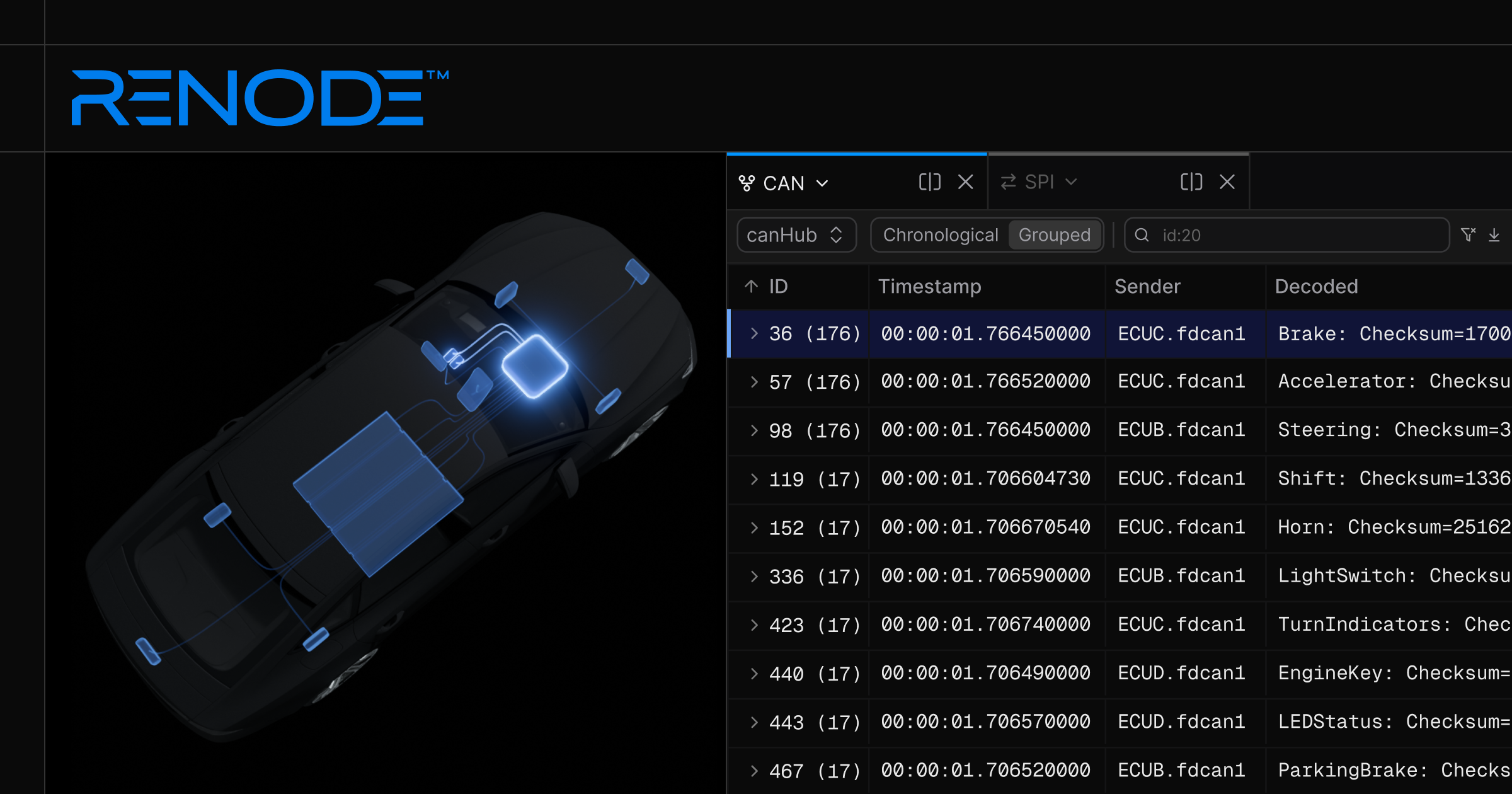
Antmicro’s open source Renode simulation framework provides support for multiple architectures, including ARM, RISC-V, Xtensa, and x86, with hundreds of boards and peripherals available out-of-the-box, all validated through CI-driven testing infrastructure. The constantly growing number of supported hardware platforms can be easily viewed in the recently upgraded Renode Zephyr Dashboard and Renode U-Boot Dashboard, while the new 1.17.0 release provided many updates in Renode, part of which were driven by the recent changes to Zephyr RTOS, and resulted in improved platform support.
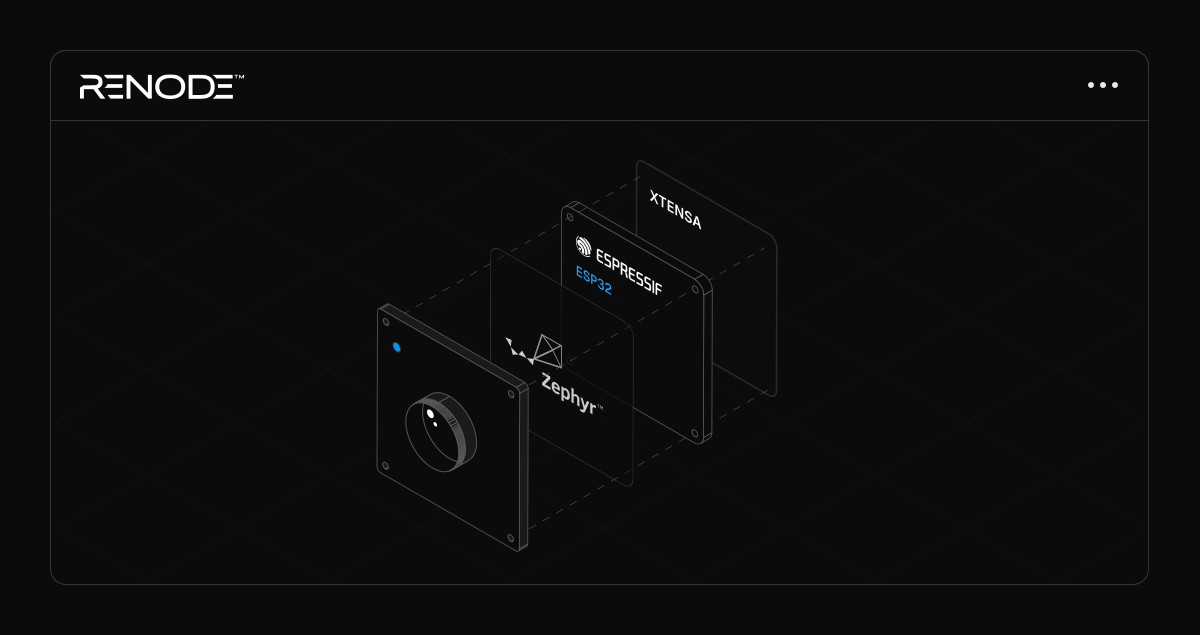
In a recent project, we significantly improved Renode support for the Xtensa architecture and extended it with the highly popular Espressif ESP32 SoC family known for its versatile connectivity options, power efficiency, and affordable cost. Thanks to this development, you can now simulate ESP32-based platforms running Zephyr in Renode to accelerate prototyping of firmware for your Xtensa-based embedded devices.
In this article, we briefly describe the Xtensa architecture and the ESP32 SoC family, and summarize the scope of their support in Renode and the Renode Zephyr Dashboard.
The configurable Xtensa architecture
Xtensa is a 32-bit RISC (Reduced Instruction Set Computer) architecture, originally developed by Tensilica (now part of Cadence Design Systems). It’s known for high configurability, allowing you to add custom instructions, interrupts and coprocessors, as well as remove unnecessary features and optimize the CPU for specific workloads.
Xtensa is also renowned for its pre-configured and customizable DSP (digital signal processing) capabilities. Developers working with the architecture don’t need to build custom instructions for signal processing features and can reuse existing software building blocks, which allows for faster and easier development of audio- and video-capable devices. For this reason, Xtensa is so commonly used in embedded systems and DSP applications. For example, the Xtensa-based HiFi 4 and HiFi 5 DSP cores can be found in SoCs used in various audio-related products, such as smart speakers, voice assistants and infotainment systems.
The most popular Xtensa platforms are devices from the Espressif ESP32 series, a family of low-cost, energy-efficient microcontrollers integrating Wi-Fi and Bluetooth. There are 3 members of the Xtensa-based ESP32 family:
- ESP32 featuring dual Xtensa LX6 CPU cores
- ESP32-S2 featuring a single Xtensa LX7 CPU core
- ESP32-S3 featuring dual Xtensa LX7 CPU cores
Notably, these cores power up a variety of embedded devices where Xtensa’s built-in wireless communication capabilities, such as Wi-Fi and Bluetooth, are a must: from smart bulbs and cooling devices to home security systems.
Extending Xtensa support in Renode and reaching 1.2K targets in Renode Zephyr Dashboard
The Xtensa architecture, including the Espressif ESP32(-S) series, is widely supported in Zephyr, an increasingly popular RTOS choice for resource-constrained devices, and is strongly supported in Renode. Due to ongoing optimizations and a growing range of Zephyr-supported peripherals, Espressif ESP32 platforms are often the hardware targets for many IoT and embedded products running the Zephyr.
Antmicro introduced initial support for the Xtensa ISA in Renode a few years ago, in collaboration with Google and the Sound Open Firmware project. More recently, building on top of that existing support and additional contributions from Betrusted’s Sean Cross, we implemented models for more peripherals in Xtensa-based ESP32 platforms, including JTAG, USB, UART, SPI flash and clocks, as well as instruction decode tables.
Thus, Xtensa is now a selectable architecture in the recently upgraded Renode Zephyr Dashboard. Out of 160 Xtensa-based targets supported in Zephyr, about 70 are passing Renode tests, bringing us to over 1200 platforms supported in the dashboard (and almost 1200 in the U-Boot Dashboard!).
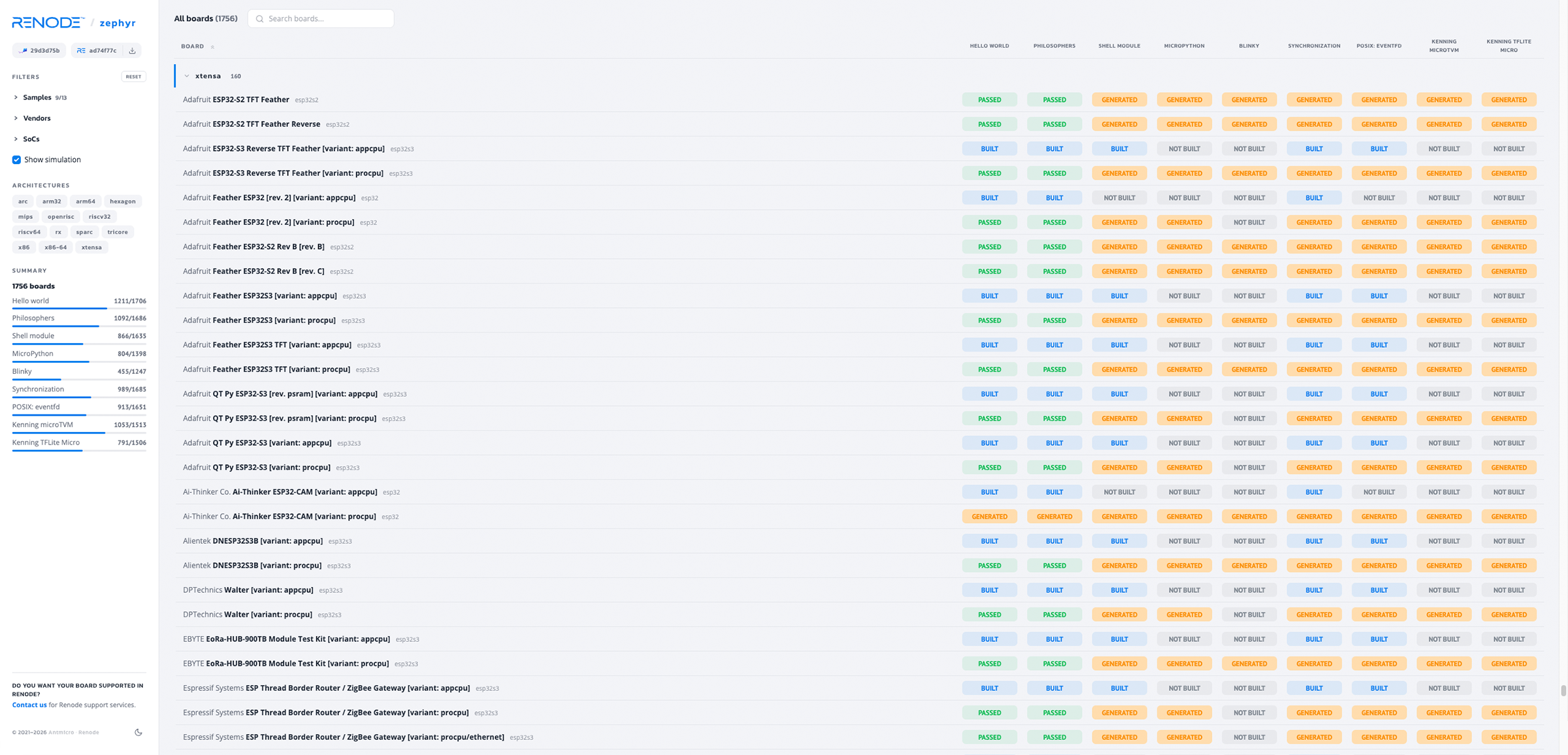
The dashboard includes several Zephyr demos, and for each passing one you can watch an Asciinema playback or even run them yourself inside the browser, provided that you have Renode running in server mode on your machine.
In addition to the current Zephyr-based boot flow, we’re also working on enabling another boot flow for ESP32 platforms that’s based on ESP-IDF (Espressif IoT Development Framework) - an official, open source development framework for Espressif SoCs. Implementing ESP-IDF will offer more ways of working on Espressif apps in Renode. As part of this effort, we will also add support for more custom peripherals to the ESP32 platforms, allowing you to test more connectivity features of your devices.
Develop and test your next Xtensa-based product with Renode
With Xtensa and the popular ESP32 series now supported in Renode, Antmicro’s simulation framework offers even more options for architectural exploration and pre-silicon development. Combined with features such as execution tracing, code coverage analysis, co-simulation capabilities and much more, Renode provides a comprehensive simulation, development and testing environment for your devices.
As part of our engineering services, we can extend a range of built-in connectivity features you can simulate in Renode, helping you test complex, multi-node IoT scenarios for your Xtensa-based applications.
If you would like to learn more about the many capabilities of Renode, visit its dedicated webpage and reach out at contact@antmicro.com to discuss your project.