00
Open hardware DC‑SCM designs
Covering DC‑SCM rev. 1.0 and rev. 2.1, with SoC and FPGA from multiple silicon vendors.
Antmicro helps design, verify and implement server management hardware and software compatible with the OCP DC‑SCM specification: from flexible dedicated SoC and FPGA-based designs and open source reference platforms, through OpenBMC integration and debugging tools, to complete server setups.
DC‑SCM 2.1 reference platform
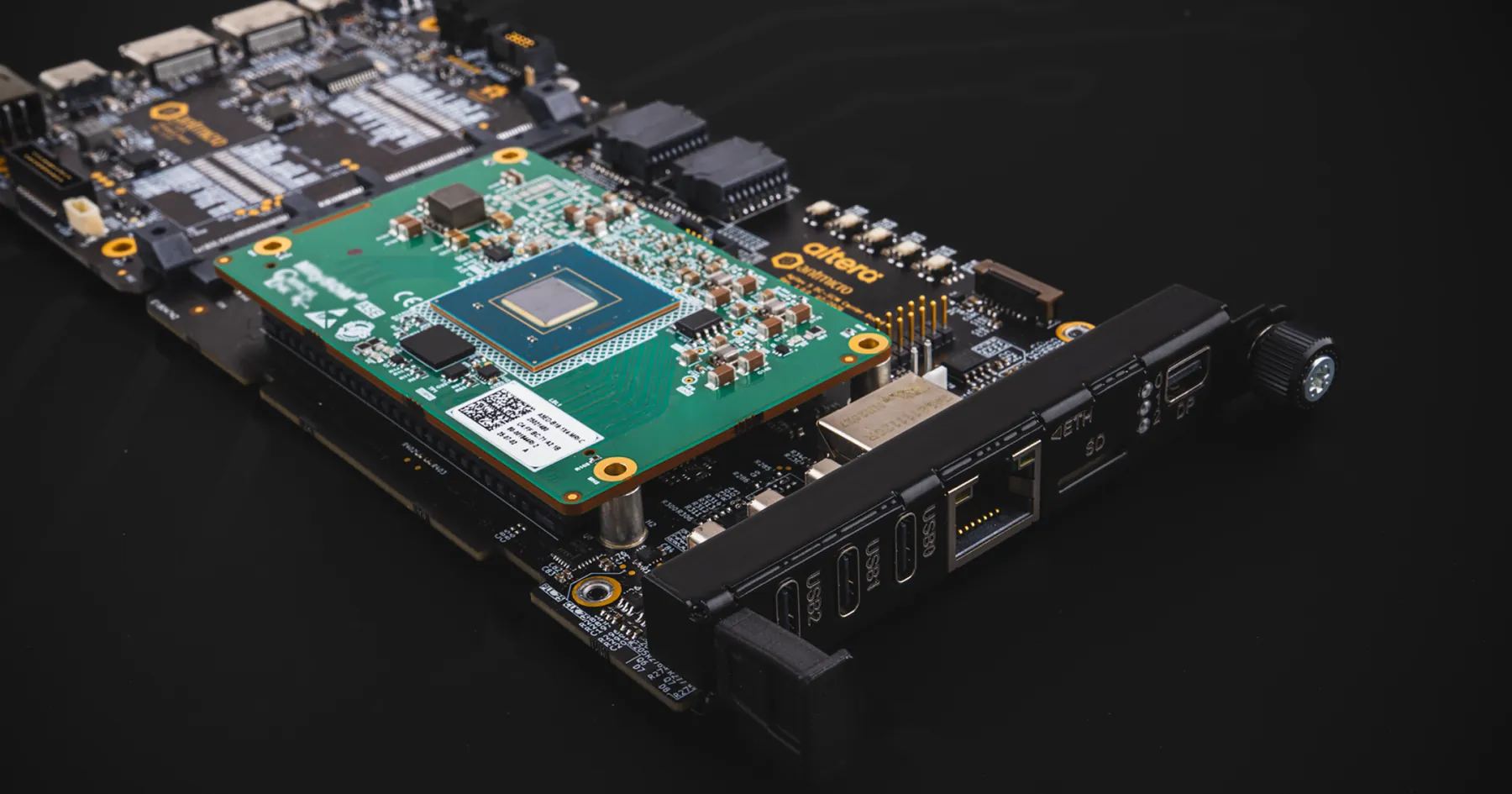
Agilex 5 Modular DC‑SCM
New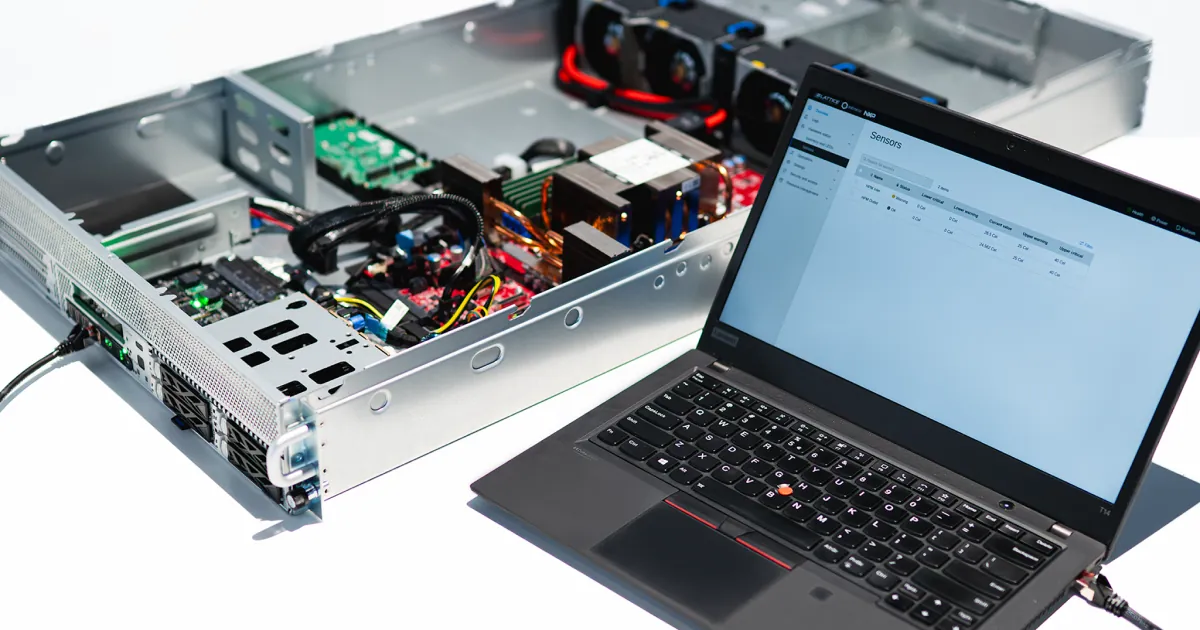
OpenBMC on OCP servers
00
Covering DC‑SCM rev. 1.0 and rev. 2.1, with SoC and FPGA from multiple silicon vendors.
00
Breakout board, DC-SCI interposer, eSPI adapter and eSPI decoder for lab-side development before deployment.
00
Numerous open and proprietary DC‑SCM designs, many OCP demos, reference platforms and servers integrated.
Many of our DC‑SCM designs are released as open hardware: proven, well-described starting points for PoCs and custom designs tailored to and integrated with your server platform.
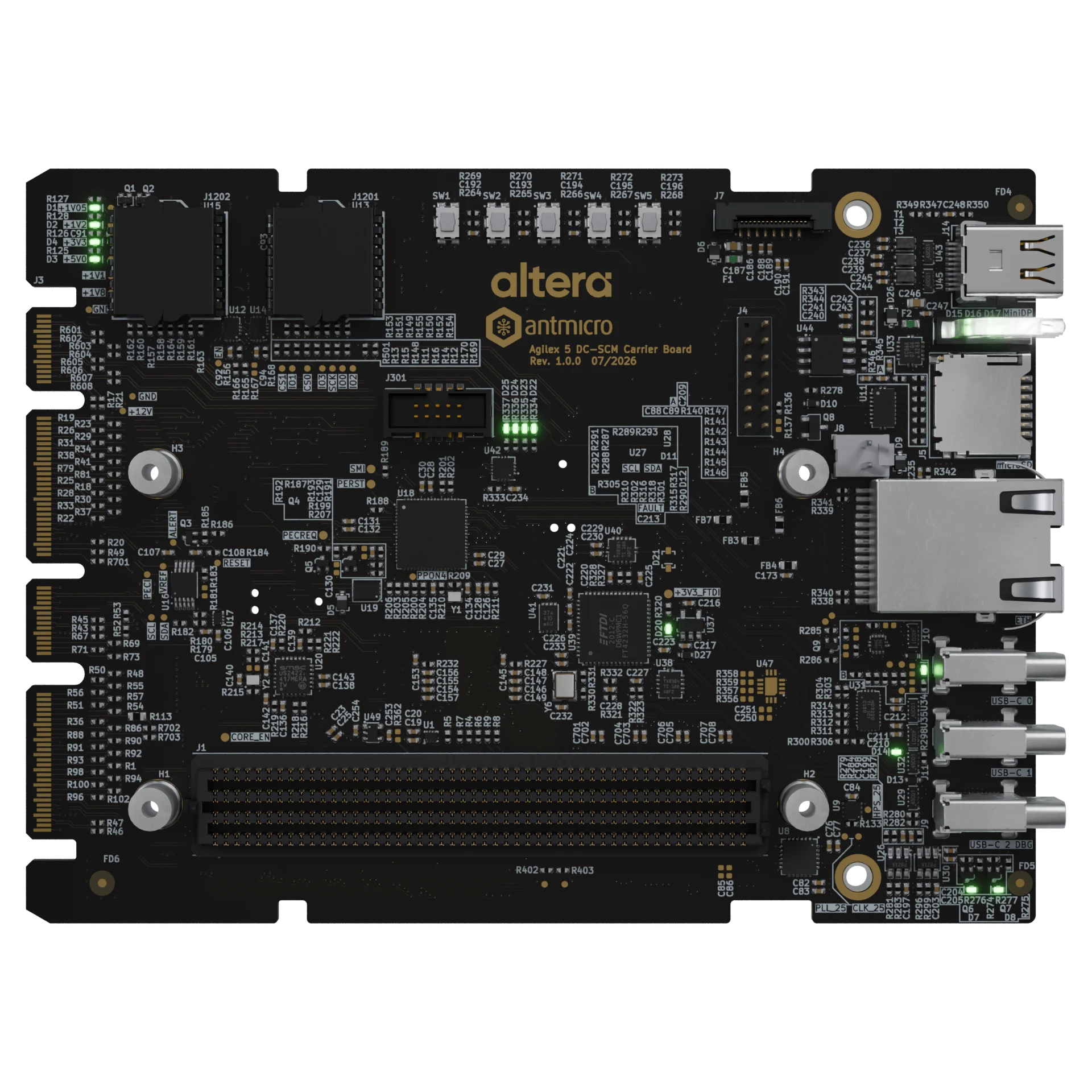
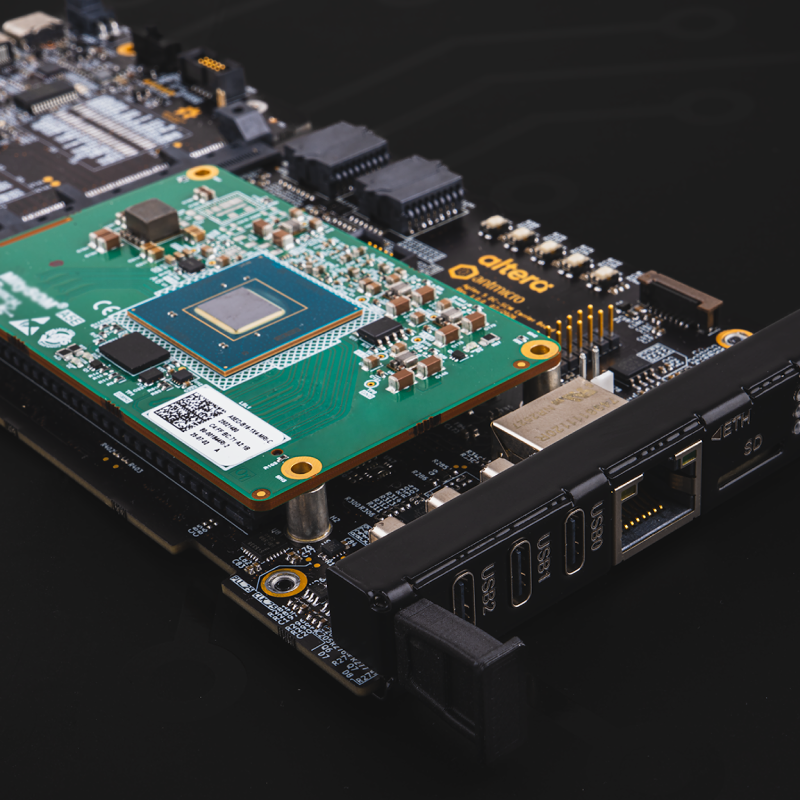
A Carrier Board built together with Altera for the Agilex 5 E-Series FPGA and SoC family: a replaceable MitySOM-A5E Mini module lets you pick any pin-compatible 5E variant and scale performance as your needs grow.
Together with Altera, we created a new open hardware DC‑SCM Carrier Card for Agilex 5 E-Series SoC FPGAs. The Linux-capable Hard Processor System runs OpenBMC, while the FPGA fabric provides a hardware abstraction layer and signal processing close to the DC-SCI interface. Swap the module to move between pin-compatible 5E variants and streamline your DC‑SCM development.
Arm Cortex-A76 + A55 HPS
Dual-core Cortex-A76 up to 1.8 GHz and dual-core Cortex-A55 up to 1.5 GHz, with up to 656k Logic Elements.
Modular and scalable
Replaceable 28 × 50.8 mm MitySOM-A5E Mini module with up to 8 GB LPDDR4 and 32 MB QSPI flash.
Standards-compliant
DC‑SCM 2.1 interface and outline, designed to the OCP HPM Common Circuit Type 1 Design Specification.
OpenBMC-ready
Yocto-based OpenBMC with sensors, D-Bus services and the WebUI configured for the hardware platform.
The Agilex 5 Modular DC‑SCM Carrier Board paired with our DC‑SCM Breakout Board lets you develop and validate OpenBMC features on the bench, mocking the relevant parts of the target HPM.
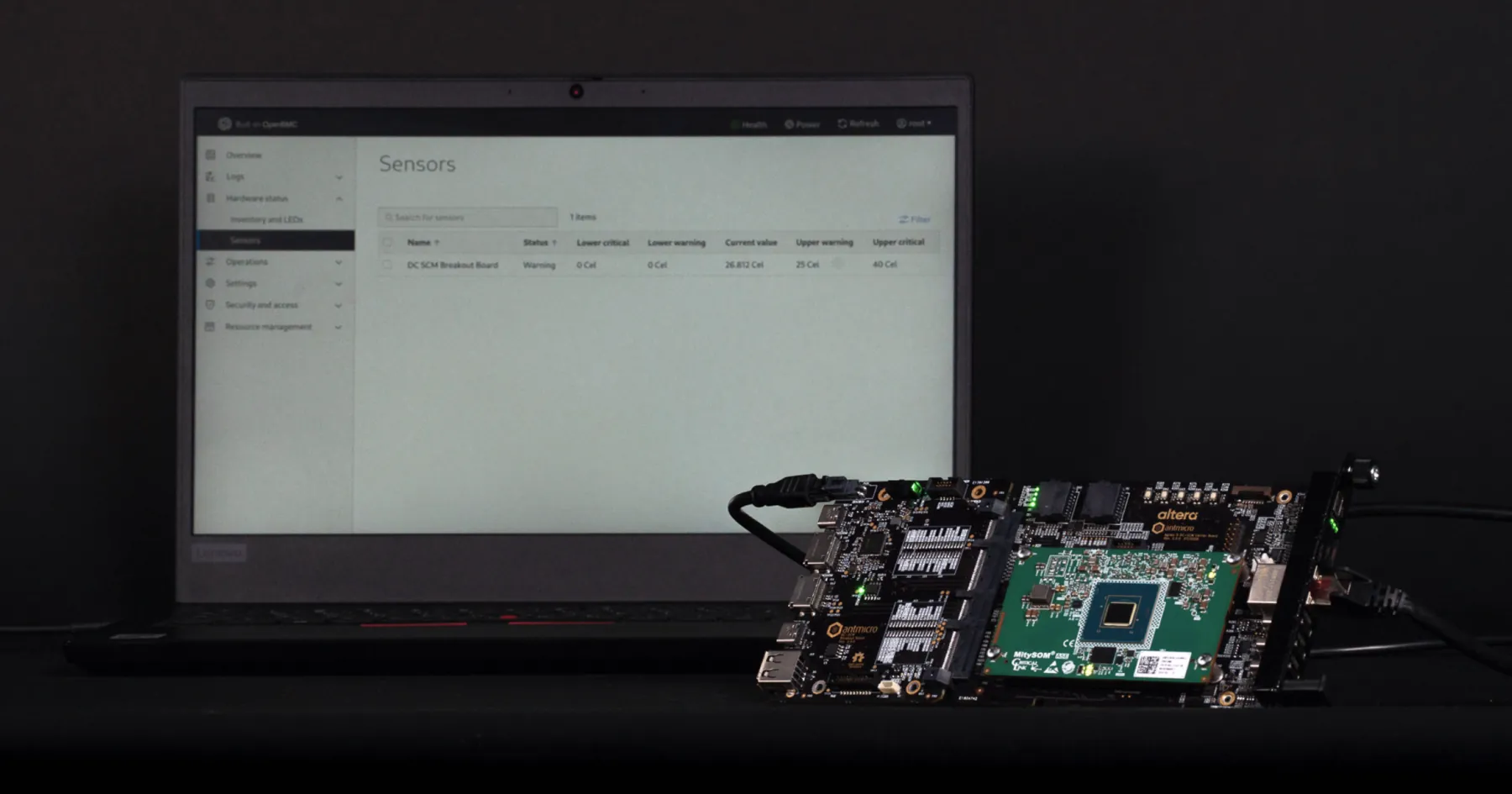
A TMP75 temperature sensor on the DC‑SCM Breakout Board is connected to an I2C bus exposed on the DC-SCI connector.
The programmable logic routes the I2C bus from the DC-SCI pins to the Hard Processor System running OpenBMC.
A devicetree node, a phosphor-hwmon configuration and an inventory association publish the sensor on D-Bus.
LABEL_temp1  = "DC_SCM_Breakout_Board"
WARNHI_temp1 = "25000"
CRITHI_temp1 = "40000"The sensor is picked up automatically by the OpenBMC WebUI, with warning and critical thresholds.
Sensors
Sample dataDC-SCM Breakout Board
32.375°C
Temperature history
We work across the whole server stack, from hardware, through FPGA IP and integration and low-level board support to OpenBMC and security features and complete, booted and production-ready server platforms.
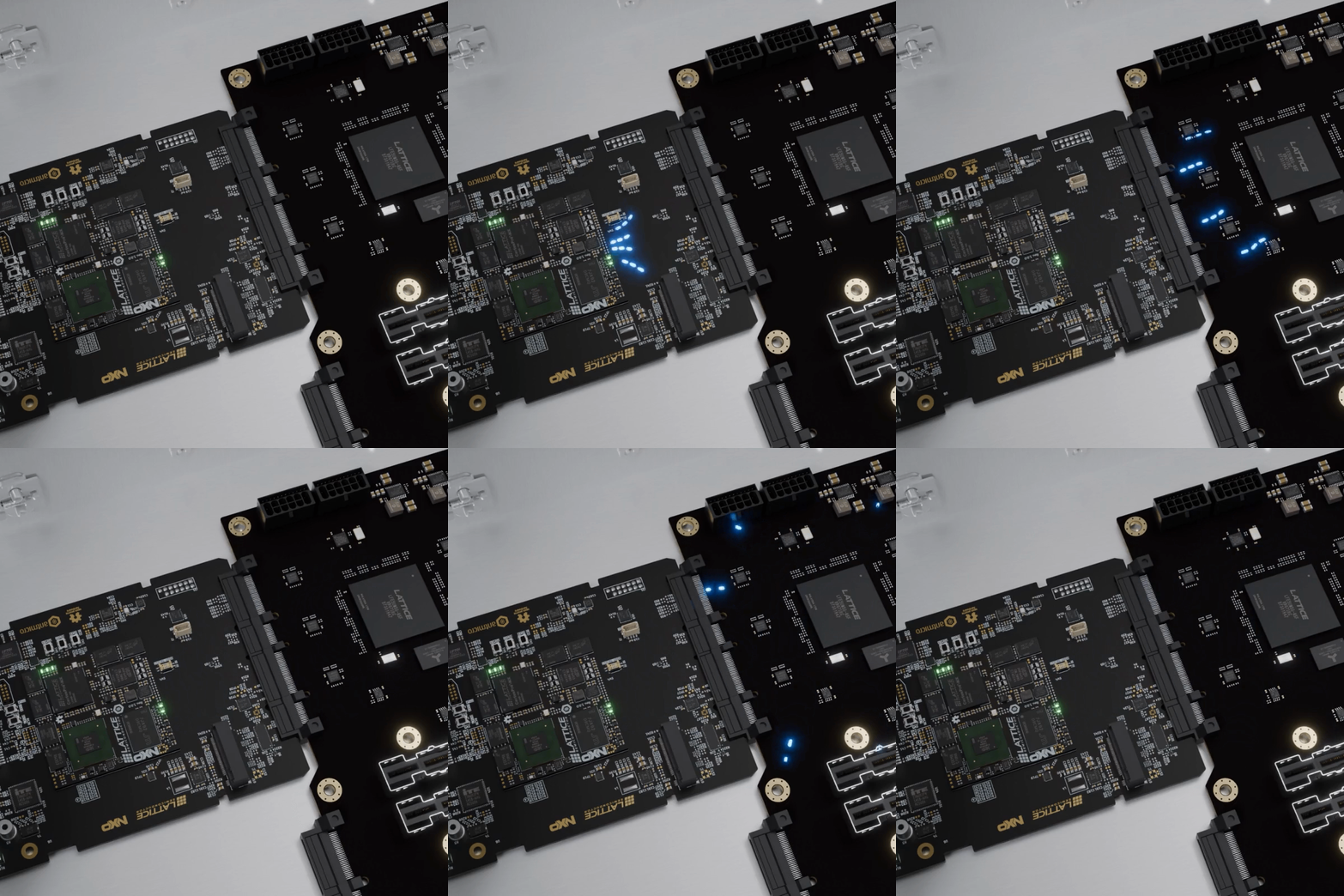
We develop FPGA IP such as LVDS Tunneling Protocol and Interface between FPGAs on the DC‑SCM and the HPM, passing I2C, GPIO, UART and other low-speed signals over four differential pairs. Routing all control signals through the FPGA pair introduces a hardware abstraction layer: different server configurations can be supported just by switching FPGA payloads.
Read about LTPI supportDC-MHS PnP FRU definitions describe the internal structure of a server. They can be used in a discovery stage where the DC‑SCM FPGA reads the FRU JSON from the EEPROM on the HPM and reconfigures itself to match the LTPI signal mapping before the host starts booting.
Read about FRU supportWe build and customize Yocto-based OpenBMC distributions for SoC and FPGA-based BMCs: board support, devicetrees, phosphor-hwmon sensors, inventory and D-Bus services, fan control and the WebUI, integrated with our OTA and testing frameworks.
Read about the reference platformA 90 × 70 mm board compatible with DC‑SCM 2.x modules that exposes LTPI, PCIe, USB, UART, SPI, QSPI and I2C to aid software development, debugging and pre-deployment validation. It powers the DC‑SCM on the bench and can be adapted to mimic a target HPM or rack management system.
View on Open Hardware Portal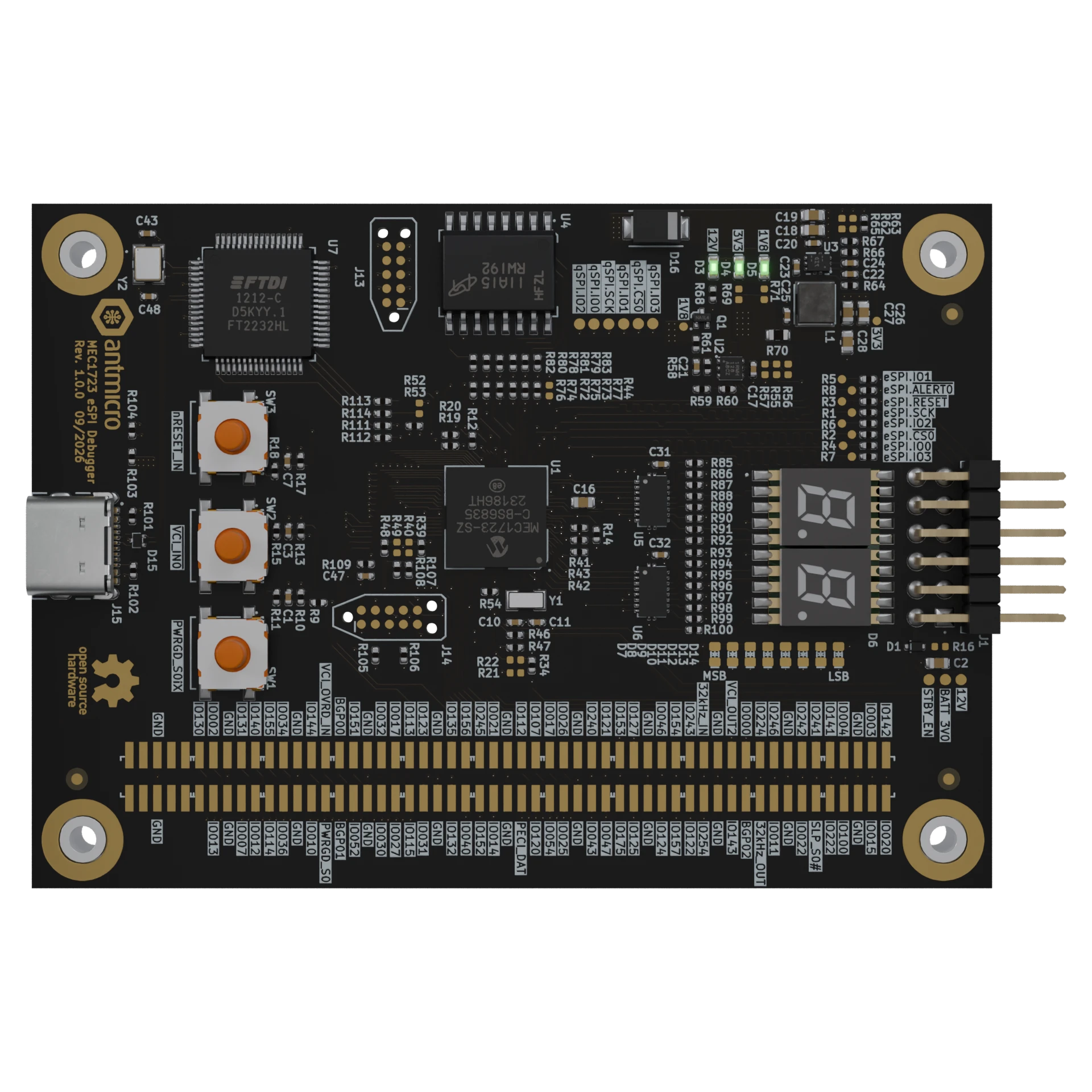
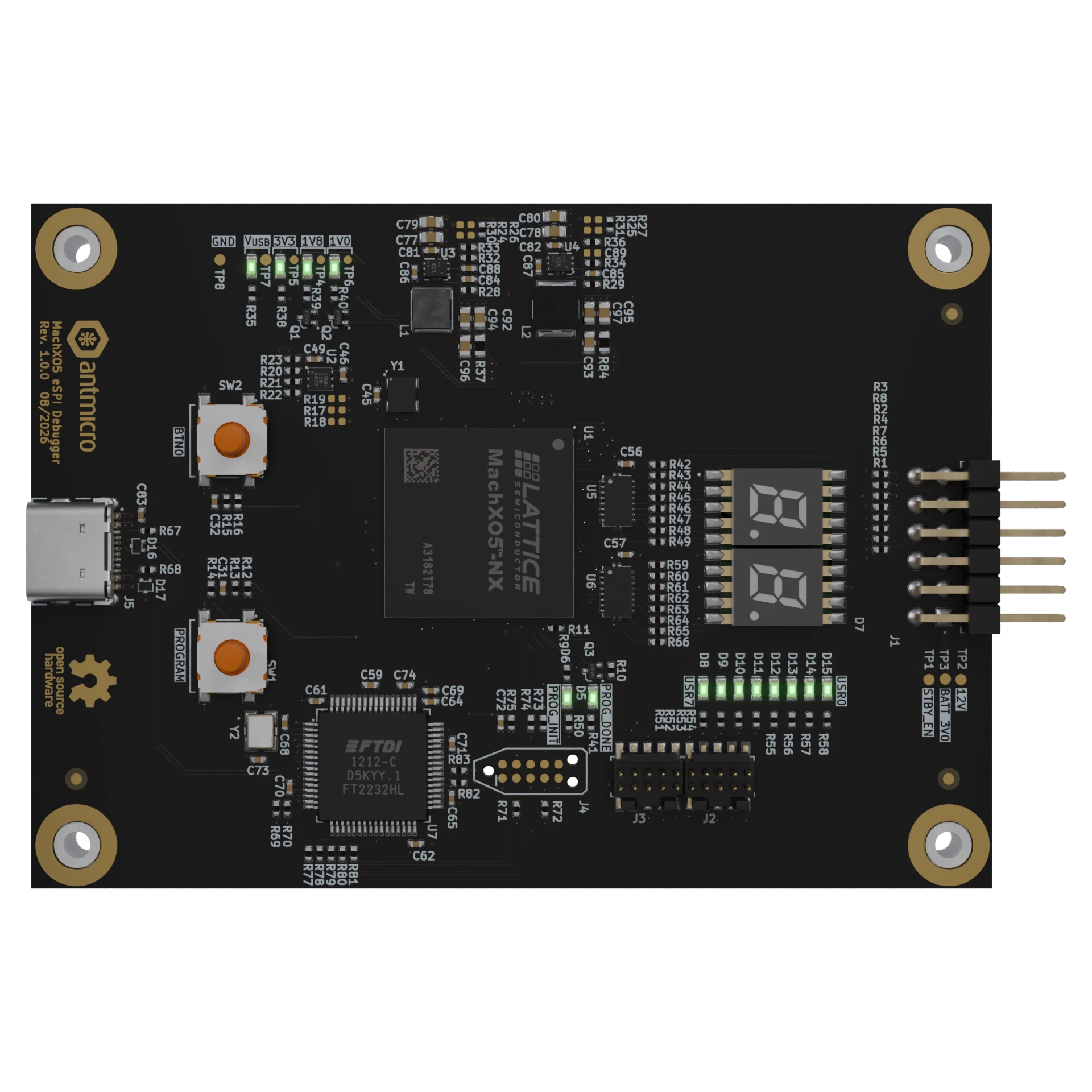
An open source plugin for Saleae's Logic 2 signal analyzer software, decoding eSPI transactions for debugging and inspection of CPU-BMC communication.
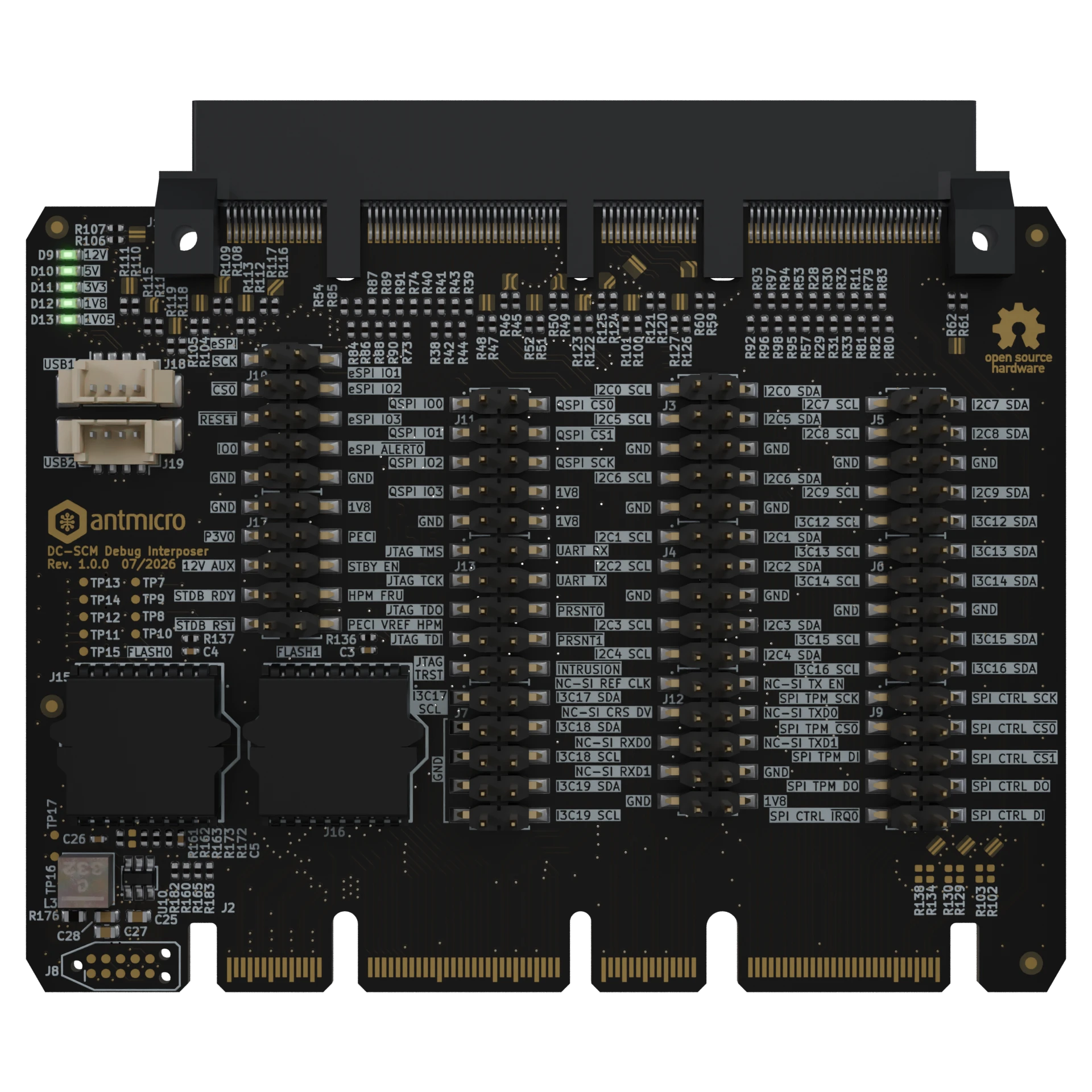
A passthrough board placed between the DC‑SCM and the HPM that exposes all single-ended DC-SCI signals on pin headers, with SOP-16 sockets for easy BIOS injection.
Using open source DC‑SCM hardware, OpenBMC and our debugging tools, we develop complete demonstration and reference platforms with OCP-compliant servers.
Reference platform
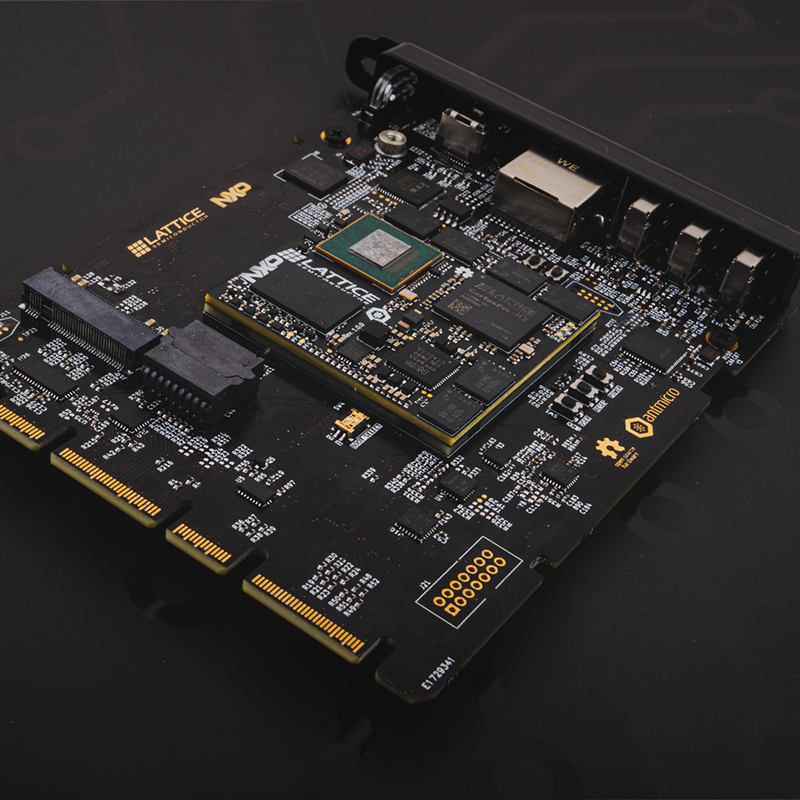
Hardware platforms like the DC‑SCM OSM-L Carrier Card with the OSM-L BMC SoM can be used to control the low-speed signals and run OpenBMC.
Access to DC-SCI
The DC-SCI Debug Interposer provides easy access to DC-SCI signals, letting us inject eSPI and LTPI signals and serve the BIOS to the server.
eSPI troubleshooting
Our eSPI Debug Adapter and the eSPI decoder plugin provide a way to troubleshoot problems with eSPI signals.
Thermal management over LTPI
OpenBMC on the DC‑SCM can read temperature sensors and control e.g. chassis fans through I2C buses tunneled via LTPI.
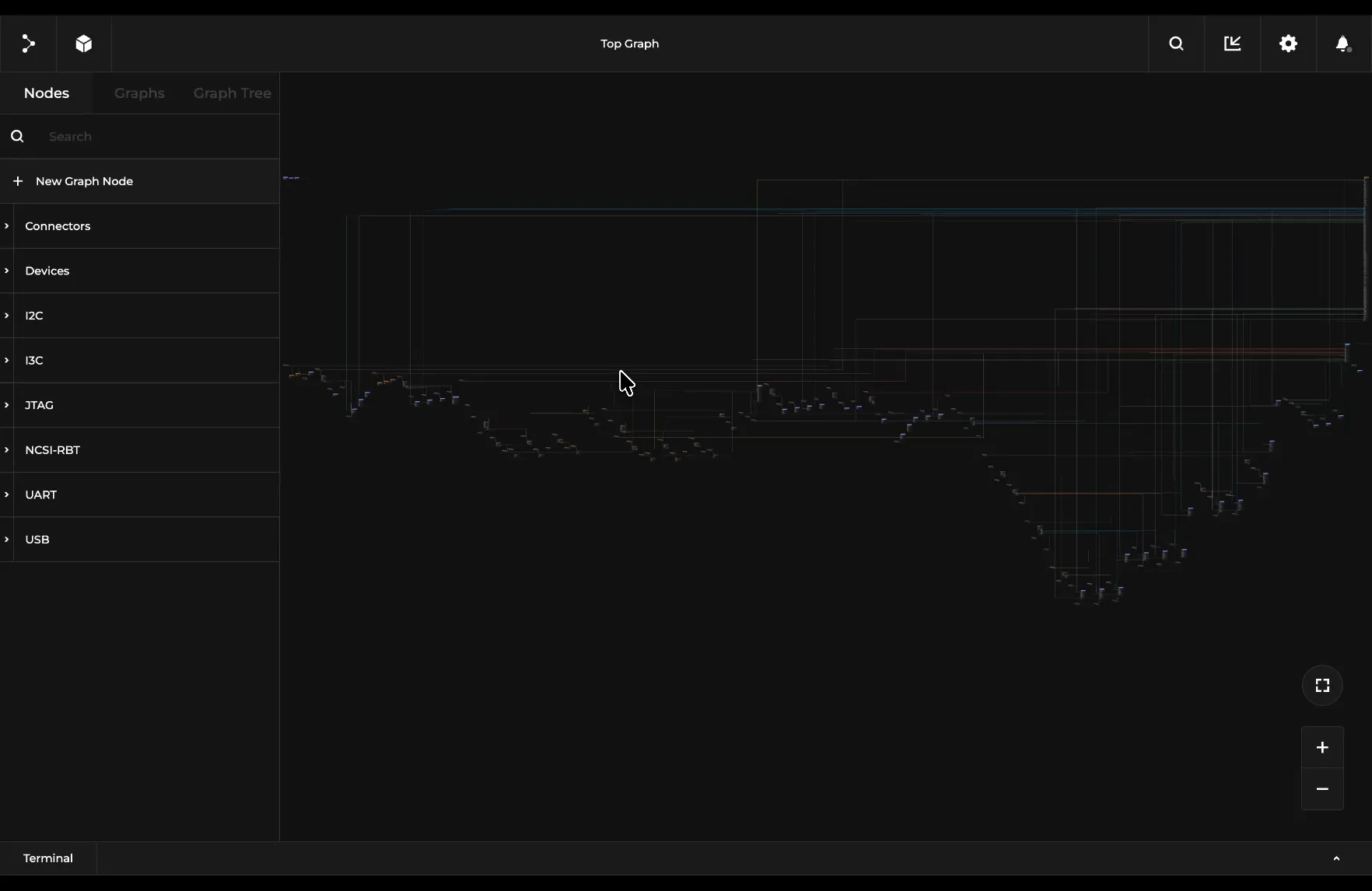
System Designer combines a library of hardware components and reference designs with multi-node diagrams of servers, power distribution, cooling and rack management. Our open source Fru2Graph tool turns DC-MHS PnP FRU JSON files into interactive graphs of every interface and connection within the system.
Our open hardware platforms are fully customizable in terms of interfaces, component layout and PCB outline, and we design anything from single baseboards to complete clusters.
LTPI implementations, signal routing and reconfigurable FPGA payloads that let one DC‑SCM support many HPMs.
Yocto-based OpenBMC and Zephyr ports, sensor and inventory configuration, OTA updates with RDFM.
RTL, DV and software development for open source Root of Trust projects including Caliptra and OpenTitan for e.g. BMC chips.
Simulation with Renode, automated hardware testing with Protoplaster and memory security testing with Rowhammer tester.
DC-MHS FRU-based descriptions in System Designer as a single source of truth shared by hardware, software and mechanical teams.
Get in touch to discuss custom DC‑SCM hardware, software and FPGA IP development.